A Critical Biography of Yuanming
Disclaimer: This post was originally written in Chinese and translated into English by GPT-5.2.
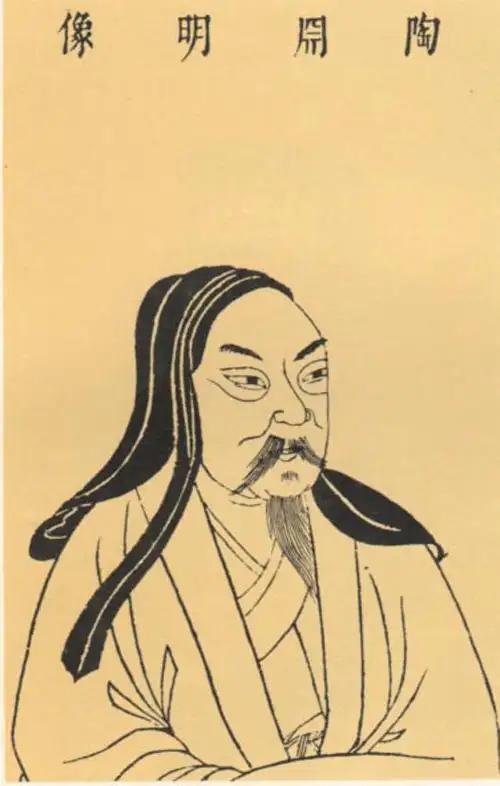
Tao Yuanming, style name Yuanliang; some say his name was Qian and his style name Yuanming, was a man of Chaisang in Xunyang (present-day Jiujiang, Jiangxi). Examining the line in “The Biography of Mr. Five Willows” that says, “No one knows where the gentleman is from, nor is it clear what his surname and style name are,” then his name was in fact but an empty guest—initially having nothing to do with any grand purport—so it is fine to be hazy and “not seek thorough understanding”; the gentleman thus obtained it. What later biographies call the true record by contemporaries likely speaks in terms of his temperament and manner, his long-held aspirations and ideals; apart from these, matters like surname, style name, family status, and so on are tools for self-display and self-advertisement, inherently discordant with his essential nature, and so the gentleman, provoked, broke them away. For this reason, the notion of clan and aristocratic pedigree was not entirely absent in him either; poems such as “Admonishing My Sons,” “Presented to the Duke of Changsha,” and “Biography of Lord Meng, Former Longshi to the General Who Conquered the West of the Jin” are evidence of it. The gentleman soared above his contemporaries and stood out in the annals of history precisely because he modeled himself on worthy forebears, whetted and encouraged himself, overlaid the deep with thin clouds, and was cautious to the end as at the beginning—not merely to cover things up with ornament.
The gentleman was born in A.D. 365 into a hereditary official family. His great-grandfather Kan was Grand Marshal of the Jin; his grandfather Mao—some say Dai—was heard to have served as Governor of Wuchang; his maternal grandfather Jia came from a family of successive officials and was also a famed Jin man of letters, once serving as Chief Clerk to Huan Wen. By the time it came to his father Yi, the family fortune had grown thin; the line of descent was as unknown as passersby, circumstances were unfavorable, and he was bereaved of his father at eight—firewood and rice became daily hardships. At twelve, his secondary mother abandoned him; at the time, the younger sister of the Cheng clan was only nine. “In weak youth I met family want” (“Written on an Occasion of Gathering”), “basket and gourd repeatedly ran empty; coarse clothes hung through the winter” (“Self-Elegy”)—the brush was no longer for literature. Even so, with inherited household teachings, what he heard and saw soaked in and permeated him; he was not of vulgar rhyme. The gentleman in childhood already had lofty interests, roamed and delighted in the Six Classics, never let go of poetry and books, poured out his feelings to strings and bamboo, loved nature by temperament—truly showing the beginnings of withdrawing into the mountains and forests before reaching the age of no doubt. With impoverished household failings, he often wandered east and west; his nature was also steadfast and firm, often at odds with things. Yet his childish innocence had not vanished, so he could still hold joy while drawing water from the valley, sing as he walked carrying firewood—having no joy, yet making himself glad. His friend Yan Yanzhi said of him: “In youth he did not like playing; grown, he truly had a plain heart. His learning did not claim a teacher; his writing took direct expression. Among the crowd he did not lose his aloneness; in speech he showed even more his silence. Young and poor and ill, he lived without servants or concubines; he could not manage well and mortar; wild greens and beans were not enough.” This may be consulted.
The gentleman had long harbored refined aspirations in the high clouds, ever wishing to emulate flying birds and soar far, to turn his back on fierce ambition and roam the four seas. As he approached thirty, he had a son, Yan; he arose to serve as a provincial libationer, beginning official service. His will felt shame; he could not bear clerical duties, and within a few days resigned and returned. As for why he entered office, Shen Yue, Xiao Tong, Yan Yanzhi, Fang Xuanling, and Li Yanshou all say, “his parents were old and his family poor.” The gentleman also, moved by a benevolent wife, worried for his children, and feared he “could not properly provide and nurture,” and so he “cast aside the plough and went to learn service” (“Singing of the Poor Scholar (No. 7),” “Drinking Wine (19)”). Yet if one alone does not say that his aspiration originally lay in ordering the state and saving the world, and that his conduct was rooted in the choice between being employed or withdrawn—would that not be untenable? The next year, his wife died, and he then married a woman of the Zhai clan. Lady Zhai later bore four sons; in all he had five sons, all untalented. At that time, the province summoned him as a registrar; he did not go, and supported himself by personally farming. But with young children filling the house and no stored grain in the jar, he then took on a debilitating illness, and it also became a later affliction. At thirty-seven, his legal mother Lady Meng passed away; at the time he was a staff member under Huan Xuan. History records that he served as Staff Officer to the Zhenjun and Jianwei commands; he once said to relatives and friends: “I only wish to strum and sing a little—could it serve as the means for my three paths?” Those in charge heard this and valued him; moreover, a family uncle Kui, then Minister of Ceremonies, supported him from within, and he was recommended as Magistrate of Pengze. Deeply humiliated at bending his waist to the inspector in order to keep five pecks of rice, he did not remain long in office. Soon after, the younger sister of the Cheng clan died at Wuchang. In the second year of Yixi, he resigned of his own accord, and then composed “Returning Home” to make clear his resolve to retire into leisure and seclusion; for the rest of his life he never again went out to serve in office. He was then forty-one.
He then moved his family from Chaisang to Shangjing (present-day western suburbs of the county seat of Xingzi, Jiangxi), lived there six years, moved the family to South Village (present-day suburban area of Jiujiang, Jiangxi) for another six years, then returned to Chaisang, writing the poem “Returning to the Old Dwelling.” At forty-four, his residence encountered fire; not one building remained, yet he could still patch together writings to divert himself. Later there was an imperial summons to serve as a Gentleman for Writings, and he only cited illness and did not go. Daily he also took tilling as his occupation: “When we meet there are no idle words, we only speak of the growth of mulberry and hemp” (“Returning to Garden and Field (No. 2)”)—purely an old farmer. Sometimes, when disaster years came and his means of livelihood grew scarce, he was not ashamed to beg for food. Hearing of learned men and famous scholars who admired the gentleman, some would go to visit, some would set wine and invite him; the gentleman would then meet them as circumstances allowed, drink wine and find contentment, with the expectation of 반드시 getting drunk. Once drunk he would withdraw, his mouth still leaving, “I am drunk and want to sleep; you may go,” never stinting feelings about staying or leaving. Beyond drinking, his elegant chanting never ceased; he played a stringless qin, merely knowing趣. The gentleman also treasured good neighbors and helpful friends, and former worthies and predecessors; his poem says: “Hearing of many plain-hearted people, I delight to be with them morning and evening” (“Moving House (No. 1)”). “I seek good friends, truly meeting those I miss… Not seeing them for one day—how could I not think of them!” (“Reply to Staff Officer Pang (Below Heng Gate)”). “How may I comfort my bosom? Relying on the many such worthies of old” (“Singing of the Poor Scholar (No. 2)”). Looking through his complete works, poems of social exchange and meditations on antiquity are quite numerous; his friends valued righteousness—such was the case. Only in his later years was his lot not good: he ceased association and cut off roaming, gradually declined and weakened, kept company with medicines and stones, bore illness under a collapsing eave, and had not a single joy in his days (“Showing to Zhou Xuzhi, Zu Qi, and Xie Jingyi, Third Young Master”). Year after year bleak, he finally died at sixty-three (Yuan Xingpei holds the view of seventy-six, which goes against common reason, yet may also be consulted).
Alas! The gentleman has gone west, more than a thousand years have passed, and those who come later still remember him; then what sort of person was the gentleman, truly? Xiang says: the gentleman was, first, an ordinary person who followed his true nature and his heart; second, a deeply profound and resolute “great-written” person—truly combining the two in one. Precisely because of this, people approached him without thinking him distant, drew near without thinking him base, calmly savored him, and further revered him as a standard. The principle is easiest to understand, seeming to have nothing to elaborate. Please allow a forced separate explanation.
As for the gentleman’s ordinariness, it lies in following his true nature and his heart, with no intention to seek novelty or establish difference. In “Admonishing My Sons”: “In the deep night a son is born, in haste we seek a fire. Of all who have hearts, why only me! Having seen him born, truly I wish he may be well. People also have a saying: these feelings are not false”—the toilworn parents’ heart is about to burst forth. Earlier it was stated he was not without the notion of honoring ancestors and glorifying forebears; this too is common psychology. In “Written on an Occasion of Gathering”: “I always cherish the heart of the one who makes gruel; deeply mindful of not having even a hooded cloak,” in “Begging for Food”: “Hunger comes and drives me away; I know not where I contend to go,” in “The Ninth Day of the Ninth Month of the Yiyou Year”: “From antiquity all have died; thinking of it, my heart is scorched”—every word and sentence is all bound up with human feelings. The gentleman loved wine as if it were life; in the piece “Stopping Wine,” the plain, sincere life, the human habits hard to quit, all emerge.
Dwelling near city and town, I roam at ease and idle. Sitting I stop beneath tall shade, walking I stop within a thatched gate. Good flavors stop with garden mallow, great joy stops with little children. In all my life I never stop wine; stopping wine—my feelings have no joy. At dusk, stopping—no peaceful sleep; at dawn, stopping—cannot rise. Day by day I wish to stop it; camp and guard stop and do not regulate. I only know stopping is not joy; I do not know stopping benefits myself. I begin to觉 that stopping is good; this morning I truly have stopped. From this one stop onward, I shall stop at the shore of Fusang. My clear face stops my old look—how could it stop for ten thousand ages.
As for the gentleman’s being a lofty person, it lies in his profundity and resoluteness, rarely being one way in the morning and another in the evening. In “Drinking Wine (No. 4)”: “Human life seems like illusion and transformation; in the end one should return to emptiness and nothing,” in “In the Ninth Month of the Gengxu Year, in the Western Field I Reaped Early Rice”: “Human life returns by having a way; clothing and food are surely its end”—how deep his penetration of the dusty world is. In “The Biography of Mr. Five Willows”: “He loved reading, not seeking deep understanding,” in “Moving House (No. 1)”: “Strange writings we together欣赏, doubtful points we analyze together”—how broad and skillful his reading is; this is something that, if not a profound person, one cannot do. His feeling of the scholar’s not being met was such that, whether not serving because it was not his time and not his kind, or serving only as a fleeting glance, he was at peace in poverty and delighted in the Way, holding it through a lifetime of worry and joy—this is resolute integrity. Friends such as Yan Yanzhi loved to give him the posthumous style “Jingjie, Summoned Recluse”—all could see it; how could it be accidental?
Yet when the great mass receives qi, is there any other reason why this man alone was so spiritually alert? Is it not only that the human heart cannot be bounded, intricately complex? Following true nature and heart is one; being profound and resolute is another—same source, different manifestation. How could there be a principle of cleaving them cleanly into two? Following true nature and heart is natural; Heaven accomplished it—instinct, nature. Profundity and resoluteness are human-made; achieved by learning and accomplished by affairs—civilization, artifice. Here lies contradiction—yet not contradiction; nor would it suffice to prove his greatness. Contradiction in the gentleman is constant; thus the gentleman is also an ordinary person. Yet the gentleman, within contradiction, could awaken to the true meaning of dialectic and practice it—this man is “great-written.” The gentleman’s three poems “Form, Shadow, Spirit” set up words separately for form, shadow, and spirit, seeking dialectic within contradiction: “Letting go and drifting within the great transformations, neither glad nor afraid; when it should end, then it must end—no more solitary over-worrying,” truly words of broad-mindedness; yet also not something the gentleman could entirely manage. The gentleman’s cherishing of fame and anxiety over death has been mentioned before, no need to belabor. As for the ardent奔逸 of the ten wishes in “Rhapsody on Idle Feelings,” the choosing of righteousness over life in “Singing of Jing Ke,” the veiled barbs and shooting shadows in “Speaking of Wine” (“With tears I hold my bosom and sigh; leaning my ear I listen to the rooster at dawn,” worrying over the situation), the readiness to die at dusk after hearing in the morning in “Singing of the Poor Scholar (No. 4),” and the negative withdrawal from the world by drinking wine—these show that he could never from beginning to end forget worldly feelings and the worldly world; though the place was remote, the heart was not far, plain to see. The gentleman practiced his Way and persisted in it, yet it was not that he was absolutely unmoved by others; “Imitating the Ancient (No. 6)” is evidence of the gentleman’s fear and anxiety about public opinion—a white jade with a slight flaw, his will pitiable:
Weary of hearing worldly talk, I make friends and go to Linzi. Under Jixia are many disputing scholars, pointing there to decide my doubts. With preparations, there is a day; I have already bid my family farewell. On and on, I pause as I leave the gate, then sit again and think to myself. I do not resent the long road, but only fear欺 between people and me. Should it not suit my intent, I shall forever be laughed at by the world. What I cherish is hard to fully tell; for you I make this poem.
Eulogy says: Great indeed is the gentleman; paper and ink cannot exhaust him. Speaking generally, ordinary yet great—perhaps close to it. In this there is true meaning; wishing to辨 it, I have already forgotten words—what benefit is there in many words? Alas, alas! Respectfully, may he enjoy the offering!
Comments